
Application concept of prestressed concrete structures
Release Time:
2020-04-20
The application concept of prestressed concrete structures is important, and it is necessary to clarify which concrete structures and stressed parts are more reasonable to apply prestress to.
(1) Suitable prestressing according to stress characteristics and stress parts
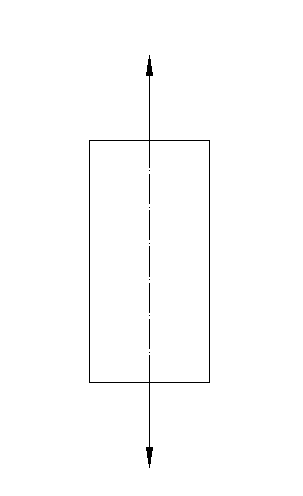
1. Axial tension members
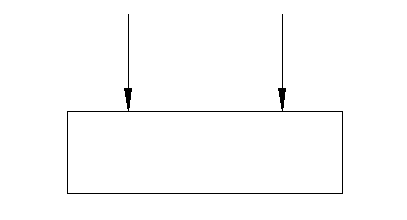
Under the action of vertical external forces, this type of member bends, and tensile stress is generated at the lower edge of the cross-section, and compressive stress is generated at the upper edge of the cross-section. Once the concrete of this type of member is cracked, the crack will be wider at the bottom and narrower at the top. To prevent this type of crack, prestressing tendons are arranged at the lower edge of the beam, and the pre-compression stress established in the tensile zone balances the tensile stress to offset the tensile stress, thereby achieving the purpose of improving the crack resistance of the structural member, reducing the crack width, and controlling the deflection (and reducing the cross-sectional dimensions, increasing the span).
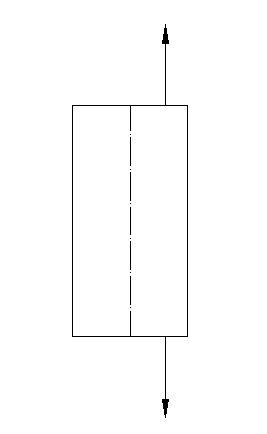
Eccentrically tensile members are subjected to eccentric external forces, and the tensile stress generated on the cross-section of the member is related to the eccentricity. The side of the cross-section closer to the tensile force generates the largest tensile stress; the side of the cross-section farther from the tensile force generates smaller tensile stress, or it becomes compressive stress. Therefore, when the concrete of this type of member cracks, continuous cracks will appear on one side wider and the other side narrower, or only one side has cracks. In order to improve the crack resistance of the member and prevent member cracks, prestressing steel bars can be set and arranged on the side of the cross-section closer to the tensile force, while the other side can have less prestressing tendons or non-prestressed tendons.
4. Eccentrically compressed members
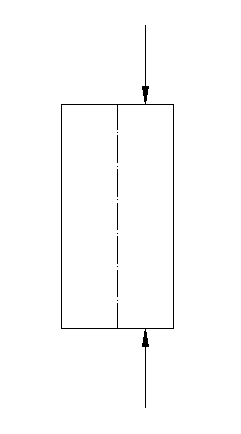
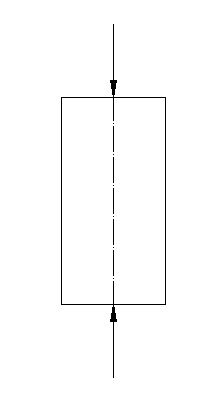
For axially compressed and slightly eccentrically compressed prefabricated reinforced concrete members, in order to avoid cracking that may occur during transportation, stacking, and hoisting due to bending, vibration, or even impact, when designing centrally compressed columns or friction piles with generally small loads, the reinforcement of the members often depends on the needs of transportation, stacking, and hoisting, rather than the stress needs during actual use. The structurally arranged axially compressed or slightly eccentrically compressed non-prestressed tendons can be changed to prestressing tendons, which not only improves the crack resistance during transportation and hoisting and the stability during use, but also saves a lot of steel.
1. Large and medium-span roof bearing structures in single-story factory buildings Roof beams, trusses, crane beams, and foundation beams are suitable for prestressing.
2 Multi-story and high Story industrial and civil building structures, large column grids, large-space frames, grid large beams, intersecting large beams, flat beams, transfer layer force-transmitting trusses or large beams, (one-way and two-way continuous) long-span slabs, roof slabs etc.
3. Public buildings, large-span space structures, suspension structures, cable-stayed structures, hanging structures Such as sports buildings, garages, warehouses, shopping malls, breweries, dance halls, theaters, multi-functional halls, shopping centers, etc., bearing structures.
4. Large Cantilever structures, such as stands, balconies, long awnings, large balconies, and cantilever floors 。
5. Medium and small Components Such as small beams, small slabs, purlins, rafters, floor slabs, flat plates, hollow slabs, etc., to save wood.
6. Special Kind of structure Such as tall structures such as TV towers, racks, pressure vessels, pressure pipelines, pools, tanks, storage warehouses, electric poles, piles, sleepers, runways, pavements, bridges, cable-stayed bridges, hanging, suspension, suspension, etc., and hydraulic structures such as dams, piers, and various plates, walls, beams, and foundations.
7. Soil anchors Rock anchors can be applied Add prestress.
In addition, shear walls, retaining walls, cylindrical structures, columns, oil extraction platforms and their prestressed legs, floating and anti-floating structures, house reinforcement and foundation reinforcement can all be pre-stressed.
Disclaimer:
Articles published on this website, except for the original channel, are reproduced from online sources unless otherwise stated;
The views expressed in the articles do not represent the position of this website, and their authenticity is the responsibility of the author or source;
If you have any copyright or other disputes regarding articles and images, please contact us in time, and we will delete them after verification.

Mobile QR Code
Liuzhou Jianqiao Prestressed Intelligent Equipment Co., Ltd.
Email:1370838748@qq.com
Address: No. 99, Xiaolongwen Road, Liunan District, Liuzhou City
Mobile:+86 13978051832
Mobile:+86 13877223782
Whatsapp:+86-13687716583
Copyright © 2025 Copyright: Liuzhou Jianqiao Prestressed Intelligent Equipment Co., Ltd.